Projects
Meristem to Production
An end-to-end propagation pipeline spanning pathogen elimination, media optimization, acclimatization, and downstream production feedback under real facility constraints.
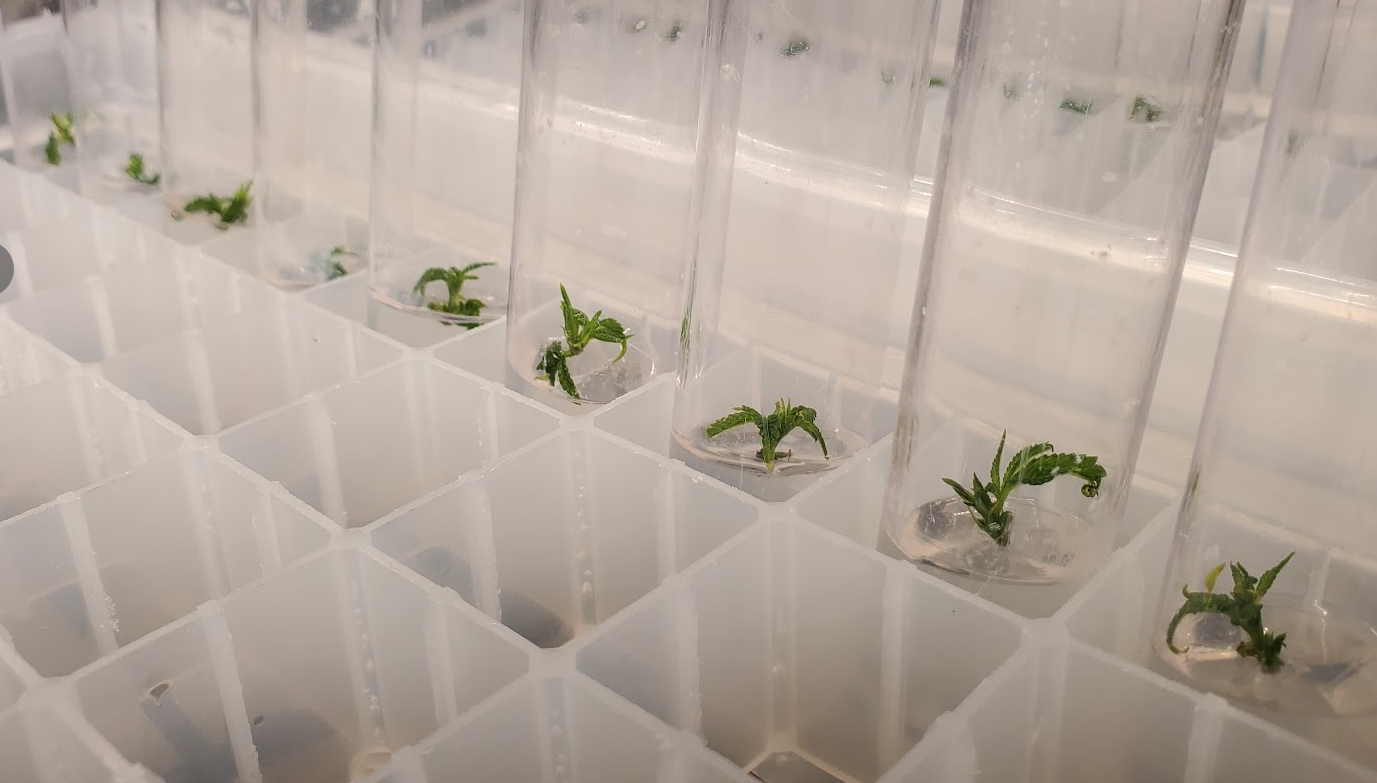
This work was not a single experiment or a single device. It was the larger propagation system around tissue culture: cleaning up genetic material, maintaining a usable upstream pipeline, tuning media and process decisions, and following the consequences of those choices all the way into later production stages.
The useful part was having visibility across the full stream. Upstream propagation choices affected acclimatization and production performance. Downstream plant behavior helped inform media selection, maintenance strategy, and how different genotypes should be handled earlier in the pipeline.
Problem shape
Tissue culture is easy to isolate as a specialized lab activity, but that separation hides a lot of the meaningful feedback. If the only question is whether material survives in vitro, the process can look successful while still performing poorly as production feedstock.
The more interesting problem is end to end: pathogen elimination, media choice, genotype response, acclimatization behavior, facility constraints, and later production performance all interact. Once those stages are treated as one system, the work becomes much more useful.
The production side mattered just as much as the lab side. The facility already existed, with its own HVAC, irrigation, lighting, staffing rhythms, and contamination risks. The practical challenge was figuring out how to operate within those constraints while still improving plant health, cleanliness, and consistency.
What I worked on
- Meristem tip dissection for pathogen elimination and genetic cleanup
- Screening, qualification, and clean maintenance pipelines for feedstock
- Media formulation and process development for different propagation stages
- Team management and day-to-day operation of the tissue culture workflow
- Connecting upstream tissue culture choices with downstream production observations
- Integrating facility operation, environmental control, and production scheduling with the biology
Production feedback loop
The value was not only cleaner material. It was the ability to make better decisions because the full chain could be observed.
Mineral nutrition and media choices made early in propagation had consequences later in acclimatization and production. Environmental responses downstream helped clarify which upstream choices were actually robust across genotypes and operating conditions. That closed-loop view made the pipeline more disciplined and more useful than a stand-alone tissue culture program.
Because the production team was also operating the facility directly, each run could be treated as an experiment as much as possible. Irrigation, moisture removal, climate control behavior, lighting, and scheduling all had to be managed within the limits of the existing building. Infrared imaging, time-lapse photography, and direct observation helped connect plant response to environmental tuning rather than relying only on nominal target ranges.
This also made it easier to connect propagation work with later disease pressure and plant vigor. Research with the University of Guelph around microbial communities and fungal pathogenicity reinforced the same point: upstream biological quality and downstream operating conditions cannot really be separated if the goal is durable plant health in production.
Why it matters
This project supports the same overall pattern as the rest of the site: technical work becomes more valuable when it is carried far enough to affect real operating decisions.
In this case, the interesting part was not just sterile technique or lab process. It was building and running a propagation system where biological quality, process design, facility operation, and production relevance could all be evaluated together.